Building FOCUS in Public · October 20, 2026 · Era
Having Ideas Is Easy. Figuring Out What to Do With Them Is the Hard Part.
Ideas aren't usually the problem. Turning them into clear next steps is. Here's the thinking behind FOCUS and why capturing a thought is the first step toward getting things done.

Having Ideas Is Easy. Figuring Out What to Do With Them Is the Hard Part.
Ideas for products. Ideas for content. Ideas for improving a workflow, building something new, or finding a better way to get things done. If you're anything like me, you know that having an idea is the easy part. It's everything that comes after that which can get complicated. An idea pops into your head while you're working on something else. You tell yourself you'll remember it. Maybe you open a new tab, send yourself a message, add a note to your phone, or write it on a random piece of paper. Then life keeps moving. You have other work to finish, responsibilities to handle, and things that already need your attention. Before you know it, that great idea is sitting somewhere in a collection of notes you may or may not remember to check. The problem isn't that you don't have ideas. The problem is creating a reliable path from having an idea to actually doing something with it. That's one of the things I've been thinking about while building FOCUS.
The Space Between Thinking and Doing
As someone who builds technology and thinks about systems, I naturally look for ways to make processes work better. But there's something interesting about productivity: we can spend so much time organizing our work that we still struggle to start it. We save ideas in one place, manage tasks somewhere else, keep goals in our heads, and try to remember what we're supposed to do next. Everything might technically be organized, yet we can still feel mentally scattered. I wanted to explore a simpler question: What if capturing a thought didn't have to mean stopping everything to figure out exactly where it belongs? What if you could get the thought out of your head first and organize it afterward? That idea is part of the thinking behind FOCUS.
Why I'm Building Around the Moment an Idea Happens
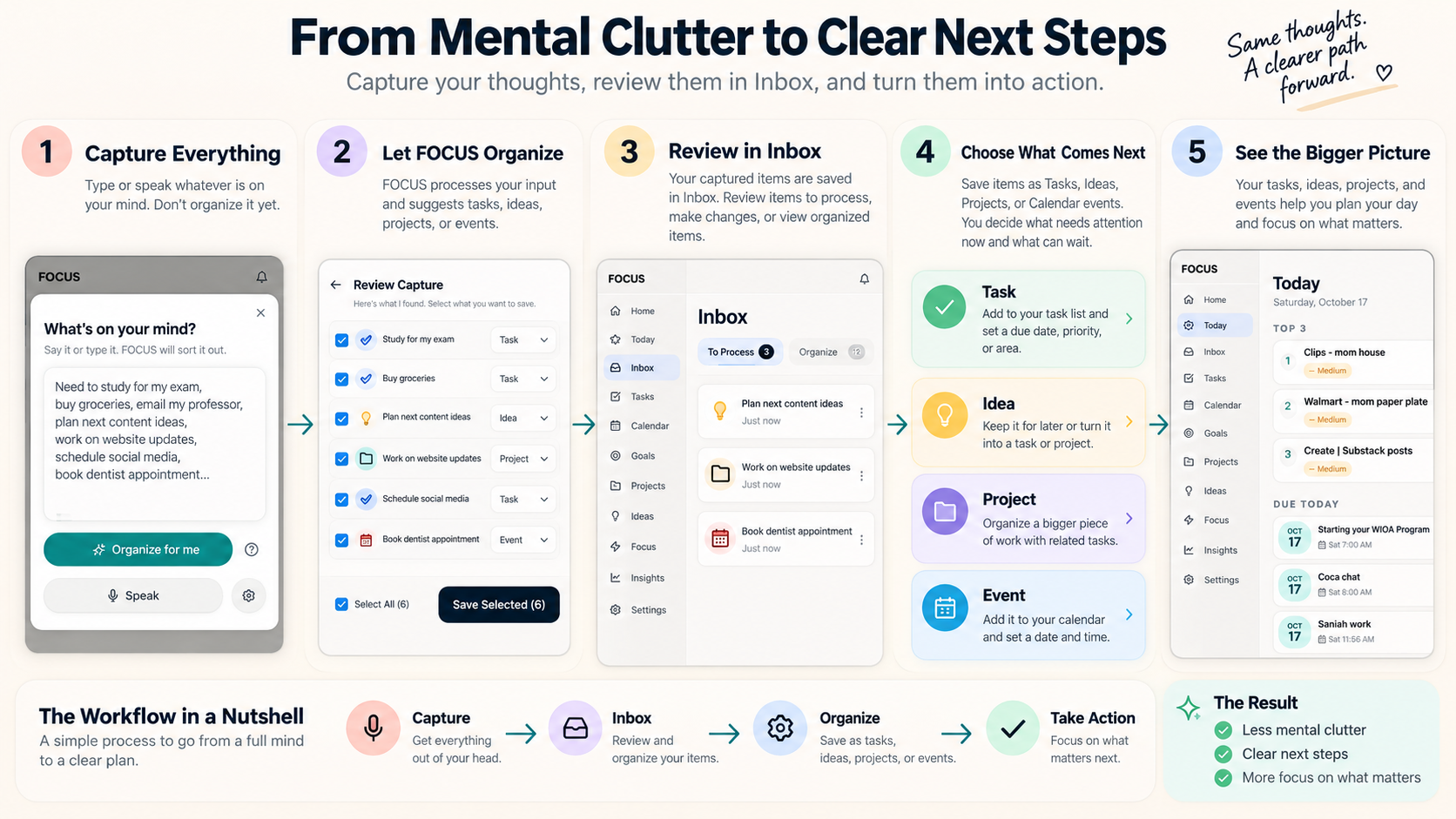
When you're in the middle of doing something, you don't always have the time or energy to turn a thought into a perfectly organized task. Sometimes you just need to capture it before you forget. Maybe it's a reminder to follow up with someone. Maybe it's an idea for your next project, something you need to research, or a goal you want to work toward. Not every thought needs a complicated workflow. But useful thoughts need somewhere to go. That's why one of the core experiences in FOCUS is turning a thought into a task. The idea is straightforward: capture what's on your mind, then turn that thought into something actionable. It's a small interaction connected to a bigger goal: making it easier to move from thinking about something to knowing what to do next.
You Don't Have to Figure Everything Out at Once
One thing I want to keep in mind while building FOCUS is that productivity shouldn't require every thought to be perfectly formed. You might not know the deadline yet. You might not know every step involved. You might not even know whether an idea will become a real project. That's okay. There's a difference between capturing an idea and committing to it. You can save a thought without promising yourself you'll work on it today. You can capture a possibility without immediately turning it into a five-step plan. Sometimes, the first step is simply getting it out of your head. Later, you can decide whether it needs to become a task, a project, a reminder, or something you leave for another time. A good system should help you make decisions about your ideas, not make you feel obligated to act on every single one.
The Behind-the-Scenes Thinking Behind FOCUS
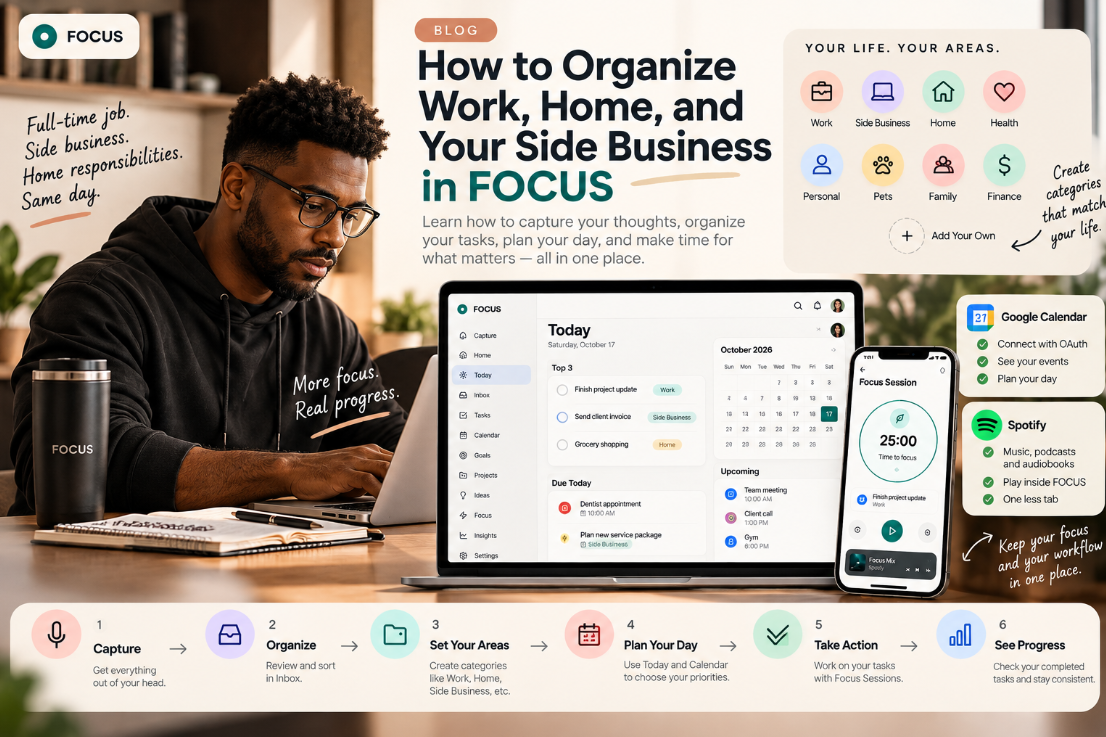
When I think about the experience I want FOCUS to create, I'm not just thinking about a list of features. I'm thinking about the moments those features are meant to support. The moment you remember something important while doing something else. The moment you have an idea you don't want to lose. The moment you realize a goal needs to become a series of smaller actions. And the moment you want to stop carrying every unfinished thought around in your head. Those moments are part of the bigger picture behind FOCUS: creating a personal operating system that helps bring your tasks, goals, plans, and ideas into a more manageable space. I'm building the product one piece at a time, paying attention to how those pieces connect and how they can support the way people actually work.
Try This the Next Time an Idea Pops Into Your Head
You don't need a new productivity system to try this. The next time you have a thought you want to remember, write it down before moving on. Then ask yourself three questions:
- Is this something I need to do? If yes, turn it into a task.
- Is this part of something bigger? If yes, consider whether it belongs to a project or goal.
- Does this need my attention right now? If not, give it a place to live so you can revisit it later.
The goal isn't to act on every thought. It's to stop relying on your memory to hold every possibility open. You can have ambitious goals, creative ideas, and a long list of things you want to build without trying to do everything at the same time. Sometimes, progress starts with something as simple as capturing the thought.
Building FOCUS, One Small Step at a Time
This is the kind of experience I want to keep building into FOCUS: a place where ideas don't have to stay ideas, and where turning them into action feels a little more manageable. I'm still building, refining, and thinking through how each part of the product fits into the bigger picture. Sharing that process matters to me because I want people to understand not only what FOCUS does, but also the thinking behind why I'm building it. If you have a mind full of ideas and a hard time deciding what to do with them first, you might simply need a better way to capture, organize, and revisit what matters. And that's a good place to start.
Ready to turn a thought into action?
Capture your ideas and give your next step a place to start with FOCUS.
Explore FOCUSTags: FOCUS, productivity, founder journey, task management, ideas